CHE 318 Lecture 30
Cooling Tower Design (I)
2026-03-18
Cheatsheet for cooling tower
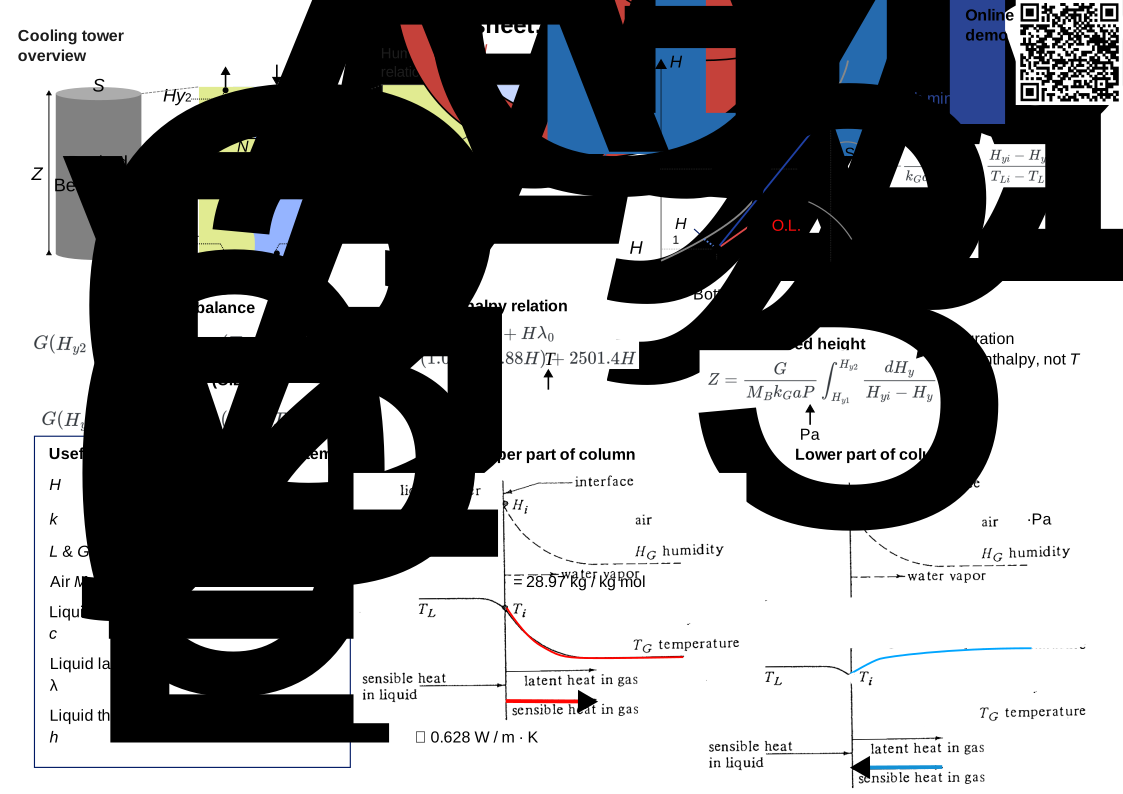
Charts distributed in class.
Introduction to cooling tower
Chemical plants often use water cooling towers for heat exchange. What is the mechanism?
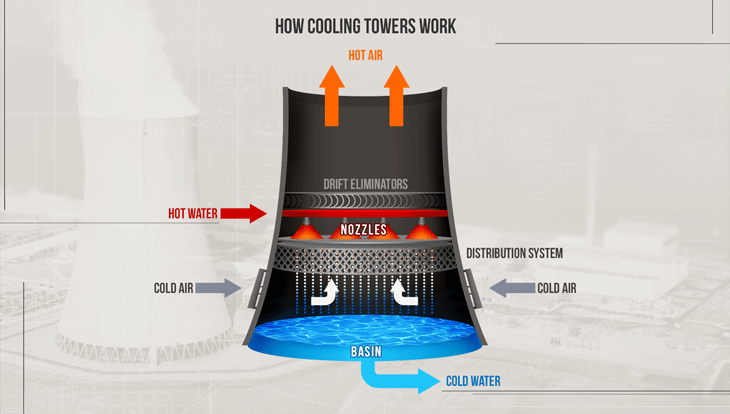
Some other geometry of a cooling tower
The iconic hyperboloid structure seen at many power plants is also a cooling tower
Note
A youtube video explains the mechanism of cooling tower in detail, with some analysis of the psychrometric chart. Highly recommended.
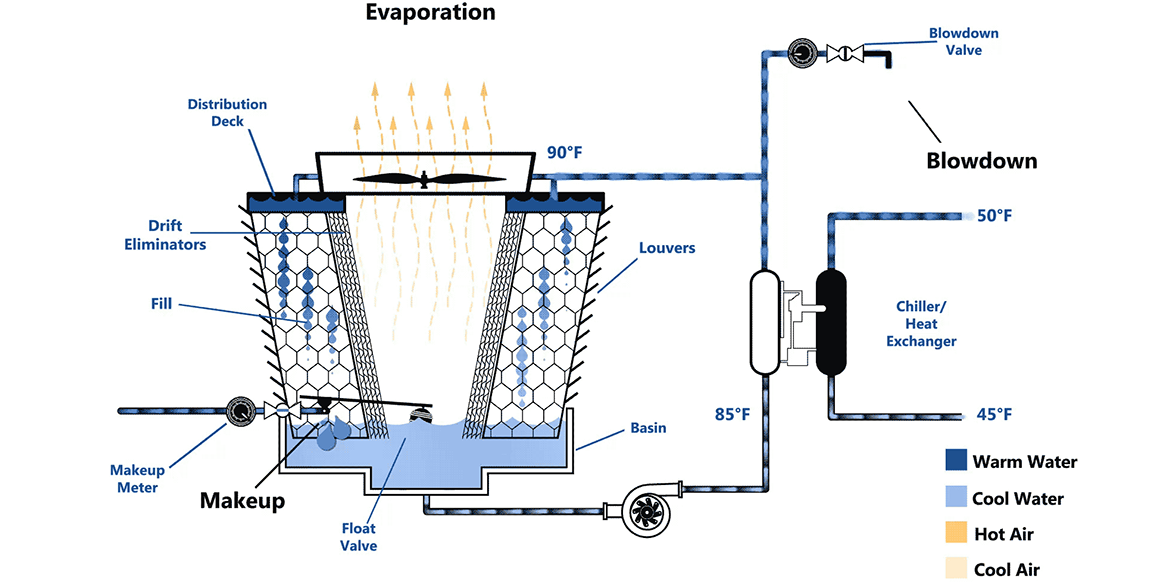
Common features of a cooling tower
- Warm water enters from the top
- (Cool) air enters from the bottom
- Cooler water leaves at the bottom
- More humid air leaves at the top
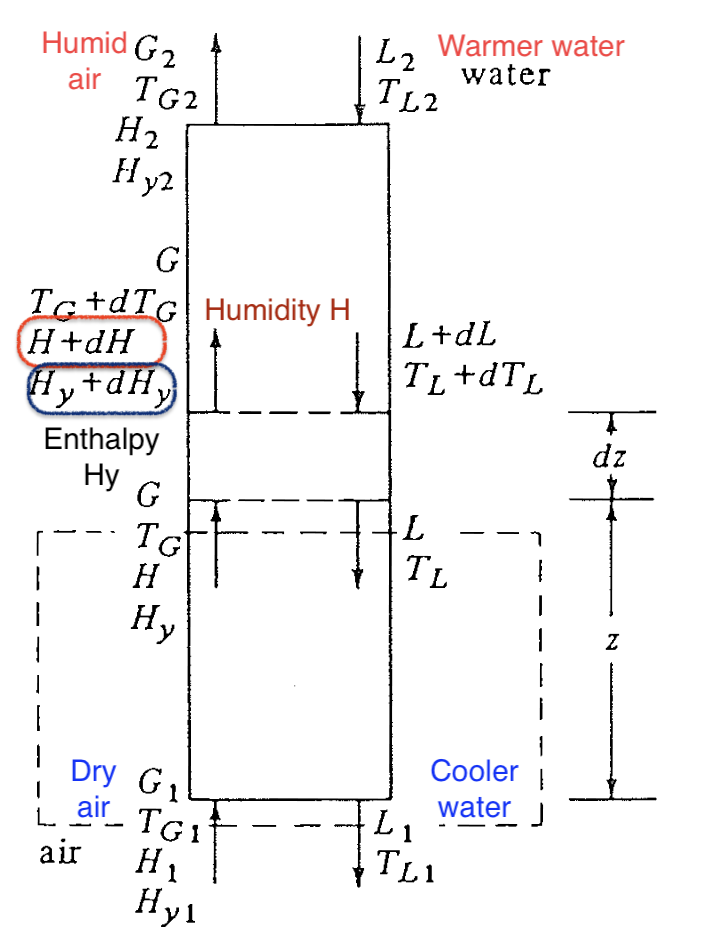
Temperature - humidity relation in a cooling tower (1)
- In the upper part of the tower, temperature in liquid is hotter than bulk gas
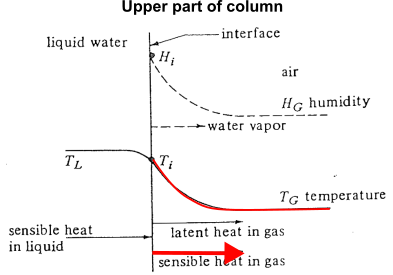
Temperature - humidity relation in a cooling tower (2)
- In the lower part of the tower, temperature in liquid is hotter than bulk gas
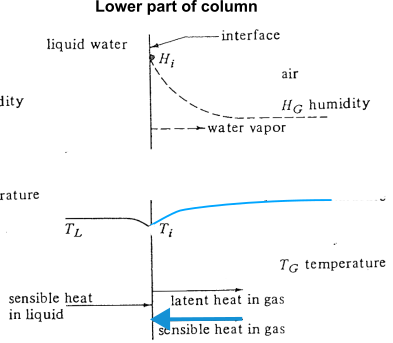
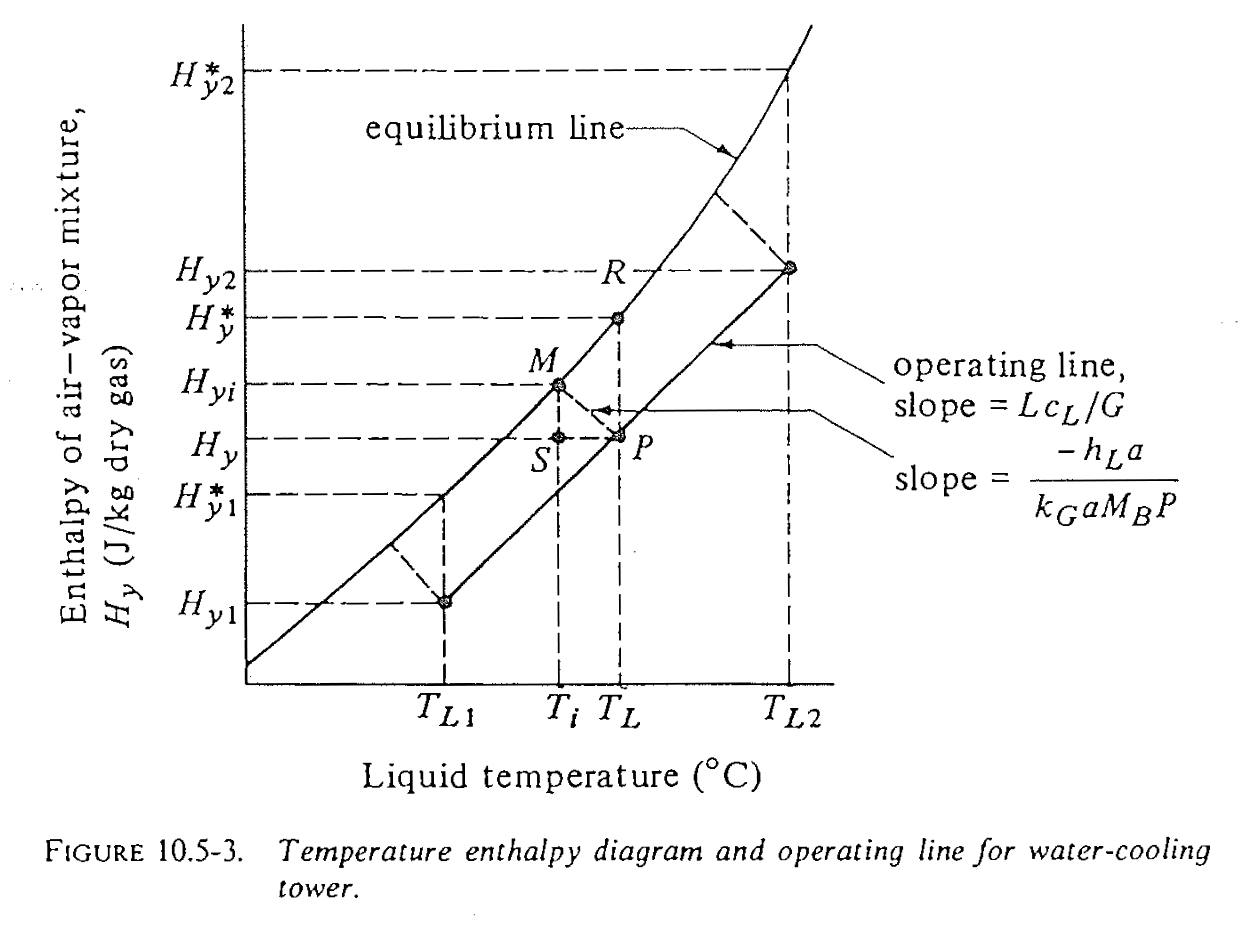
Meaning of the enthalpy - temperature chart
- What are points on the equilibrium line?
- Are we operating above or below the line? (What does it mean?)